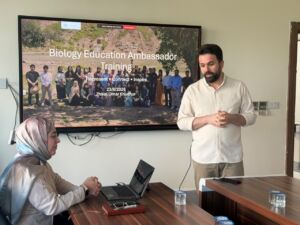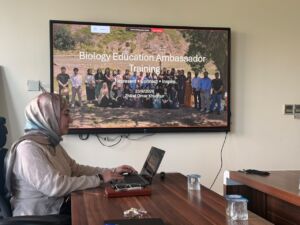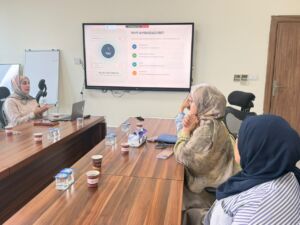
On 23 August 2026, the Biology Education Department, Faculty of Education, held a meeting to introduce the vision and future direction of a planned Biology Ambassador Program, an initiative designed to strengthen the department’s connection with prospective students and communities across the region and throughout Iraq.
The meeting opened with an encouraging speech by Mr. Harmand Ali Hama, Head of the Biology Education Department, who welcomed the participating students and emphasized the importance of their active involvement in the department’s initiatives. He highlighted the value of student responsibility, teamwork, initiative, and engagement, encouraging students to take an active role in representing their department and Tishk International University (TIU) and contributing to its outreach efforts.
Following the opening remarks, Mrs. Zhikal Omer Khudhur introduced the concept of the Biology Ambassador Program and explained its purpose, future direction, and the role students could play in supporting the department’s outreach activities. She presented the initiative as a planned opportunity to establish a network of Biology Education student ambassadors who could represent the department both in the field and through digital platforms, helping make information about TIU and its educational opportunities accessible to a wider audience.
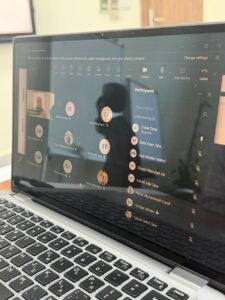
The meeting was conducted in a hybrid format, allowing students to participate both on campus and remotely. Students who were available in the city attended in person, while those who were outside the city joined through an online meeting. This format allowed students from different locations to receive the same information, participate in the discussion, and become part of the department’s future outreach plans.
During the session, Mrs. Zhikal Omer Khudhur explained that the purpose of the proposed ambassador initiative would extend beyond conventional university promotion. The program would aim to create a stronger and more direct connection between the Biology Education Department and prospective students, with ambassadors potentially serving as representatives of the department within their communities and through their online networks.
As part of the future plans discussed, students could become involved in a variety of outreach activities, including visiting schools and educational institutions, delivering presentations to Grade 12 students, participating in promotional events, distributing university and departmental brochures, communicating directly with prospective students, and supporting outreach activities in different cities.
The program would also include an important digital outreach component. Students could contribute by preparing and sharing informative social media posts, joining and engaging with Grade 12 and school-related online groups, communicating with public social media pages, sharing official university announcements, and helping extend the reach of information about TIU, the Faculty of Education, and the Biology Education Department through their own online networks.
Ms. Heshu Jalal Ahmed also contributed to the meeting by discussing the impact and potential of social media as a communication and outreach tool. She highlighted how effectively used social media can help students reach wider audiences, share useful information, and create stronger connections with prospective students and their communities. She also shared practical tips on how students could make the most of these platforms, including presenting information clearly, creating engaging and informative content, maintaining consistency, and using social media responsibly and effectively. Her discussion provided students with useful guidance on how digital platforms could support their future roles as Biology Ambassadors and help extend the reach of the department’s outreach activities.
Another important focus of the meeting was the role and responsibility of students within the planned program. Through their participation, students would have the opportunity to become more closely connected with their department while developing valuable skills in communication, teamwork, presentation, organization, and public engagement. Their own experiences as Biology Education students would also allow them to communicate with prospective students from a student perspective and provide accessible information about university life, academic programs, and available opportunities.
The planned ambassador network would also provide the department with a broader group of student representatives and community connections. Students from different cities and communities could contribute according to their own locations, networks, and abilities, helping the department reach prospective students who may not always have direct access to university representatives or campus activities.
The meeting therefore established the foundation for a broader student-led outreach strategy, with school visits, presentations, social media engagement, online communication, brochure distribution, and participation in promotional activities discussed as examples of the initiatives that could be developed through the program in the future.
By giving students a more active role in representing their department, the Biology Ambassador Program is intended to encourage greater responsibility, engagement, teamwork, and connection with the Biology Education Department. It also aims to provide students with meaningful opportunities to contribute to their department while helping prospective students learn more about Tishk International University and its educational opportunities.
Through this planned initiative, the Biology Education Department seeks to develop a wider and more connected student network that can support its future outreach activities, strengthen communication with prospective students, and expand the university’s reach across different communities through both face-to-face and digital engagement.